
Cost of Living
The Ripple Effect: How the Middle East Situation Can Impact Your Daily Kopi
29 July 2026
As a small, open economy, Singapore imports practically everything – from food products and raw materials to much of our energy needs.
With the ongoing developments in the Middle East, global developments can produce ripples in your cup of kopi.
It starts with fuel.
Before the conflict, some one-quarter of global seaborne oil and about a fifth of global natural gas supply typically passed through the Strait of Hormuz. Closure of the Strait has caused this flow to plummet and fuel prices to soar.
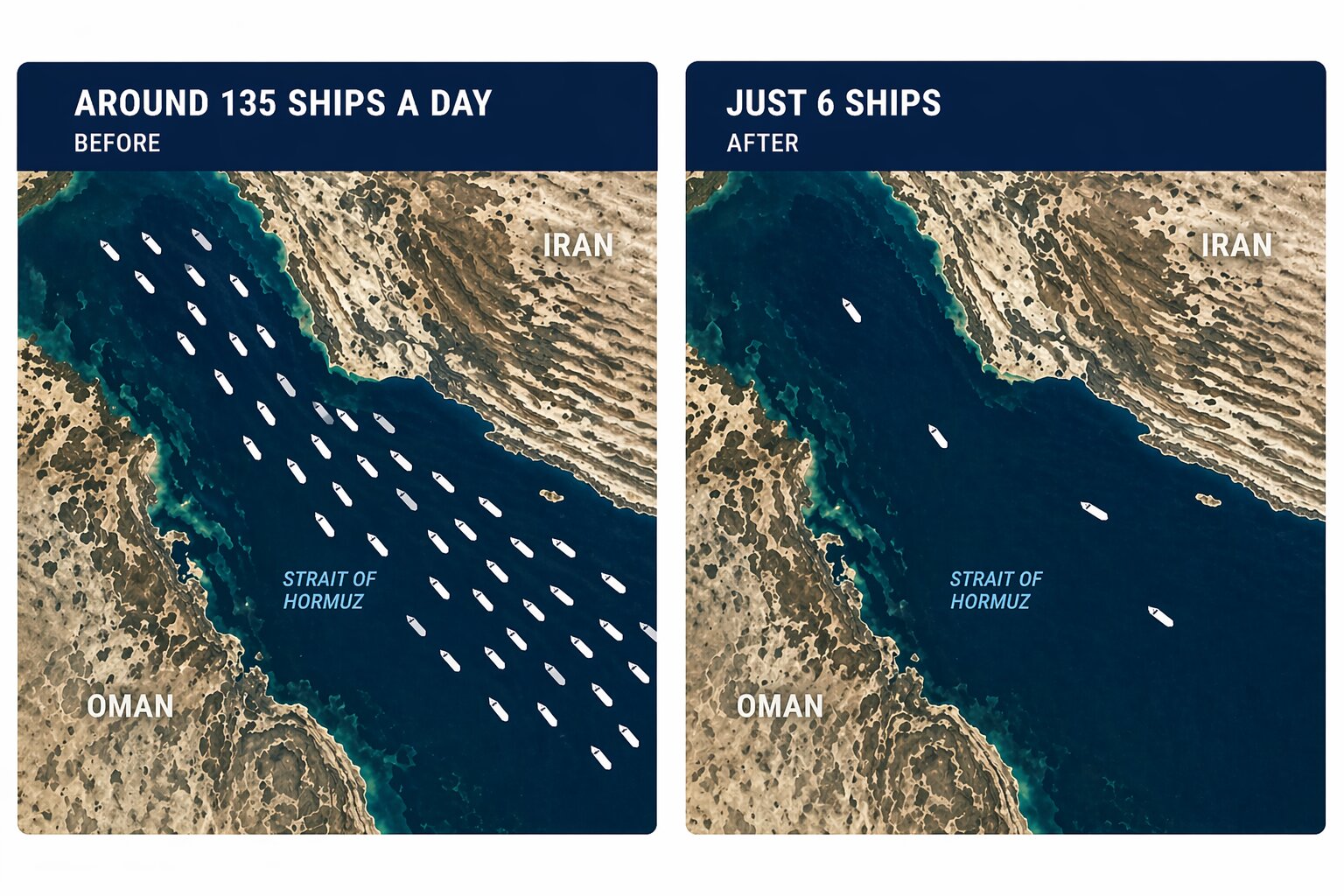
Graph 1: In March 2026, vessel traffic through the Strait dropped from around 135 ships a day to just six, significantly constraining global supply.
Food: Compounding costs for a daily essential
Less straightforward, though, is the impact this situation has had on global food supply and prices.
Fertilisers are used widely by food producers to increase crop yield and guarantee stronger and healthier plants. But a crucial component in fertilisers happens to be natural gas.
Disrupted gas supplies have caused a slowdown in fertiliser production. This has been further compounded by the fact that much of the global supply of fertilisers also passes through the Middle East.
The result – a global shortage in fertilisers and possibly higher food prices. The cost of food production may rise – and part of these costs may be passed on to consumers.
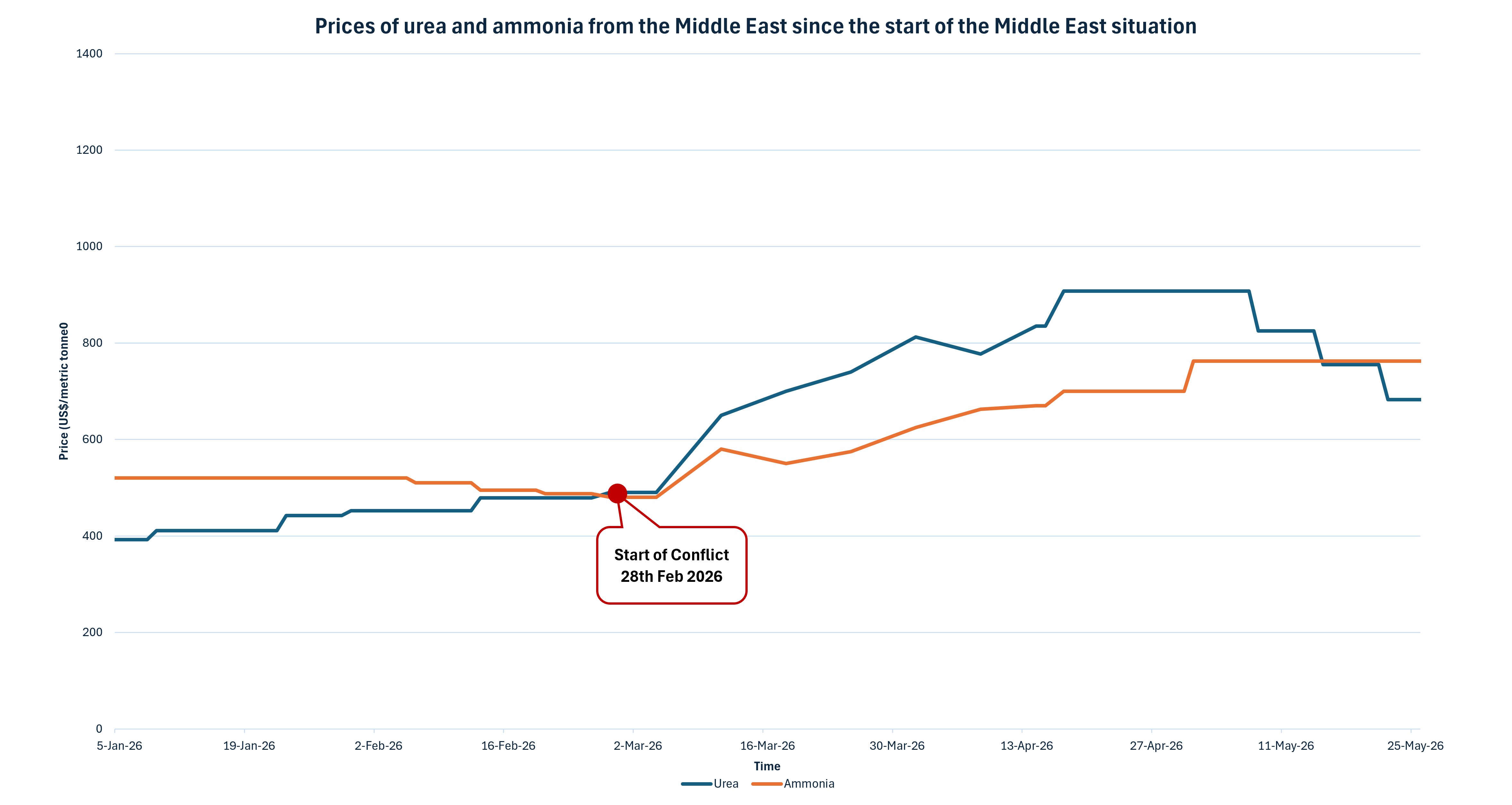
Graph 2: Following the onset of the conflict in end-February, urea and ammonia prices had shown sharp and sudden spikes since the start of the Middle East situation and continue to be volatile due to global energy shocks.
Transport: Getting around may cost more
It may also get more expensive to move goods and people around now, globally and locally.
Most of Singapore’s transport system still runs on petrol or diesel. This ranges from private vehicles to public transport, taxis, and private hire cars.
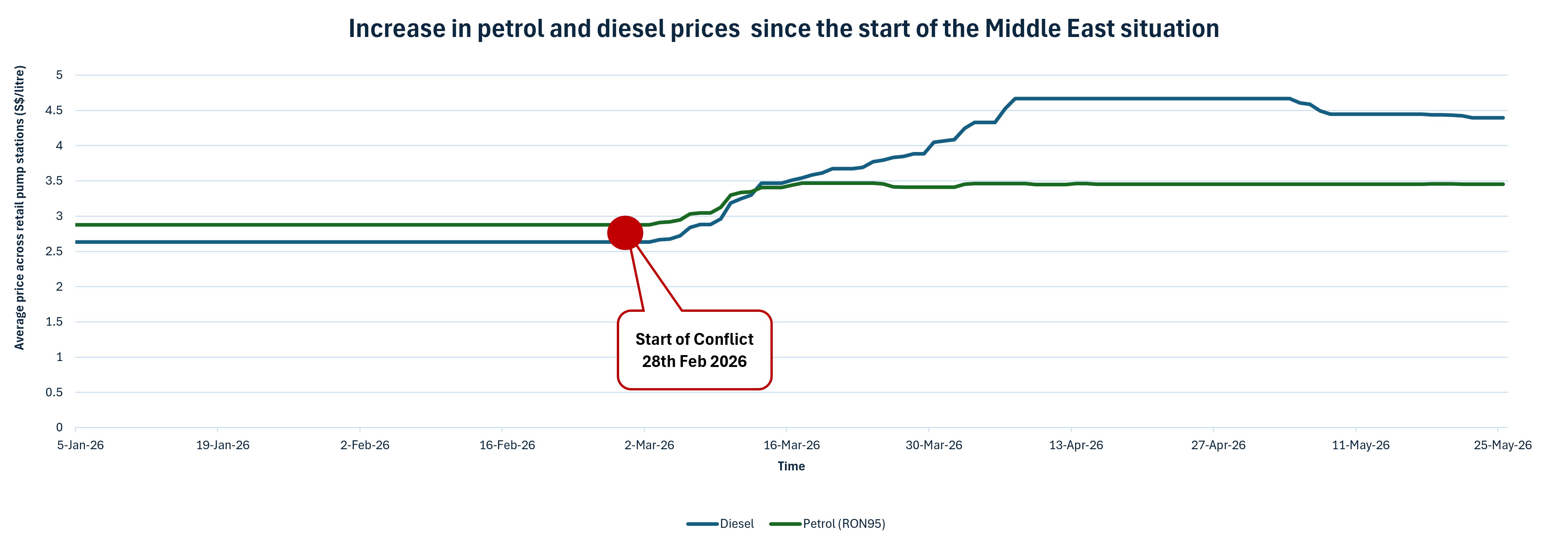
Graph 3: As of 25 May 2026, petrol and diesel prices have risen by 19.9% and 67.1% respectively since the start of the Middle East situation.
Higher transportation costs can also affect the costs of goods as delivery and logistics providers are hit by fuel price hikes. Airfreight rates between Asia and Europe have almost doubled since the start of the conflict. The rerouting of maritime routes to avoid the conflict zone has also expanded journey time and fuel consumption for shipped goods.
Amidst this more challenging environment, businesses may pass costs on to consumers, often in the form of fee increases, or by directly building them into the cost of goods, like your coffee beans.
Electricity: Keeping the lights on
When it comes to fuel for power generation, Singapore is particularly exposed. This is of special concern because:
About 95% of Singapore’s electricity is generated from natural gas.
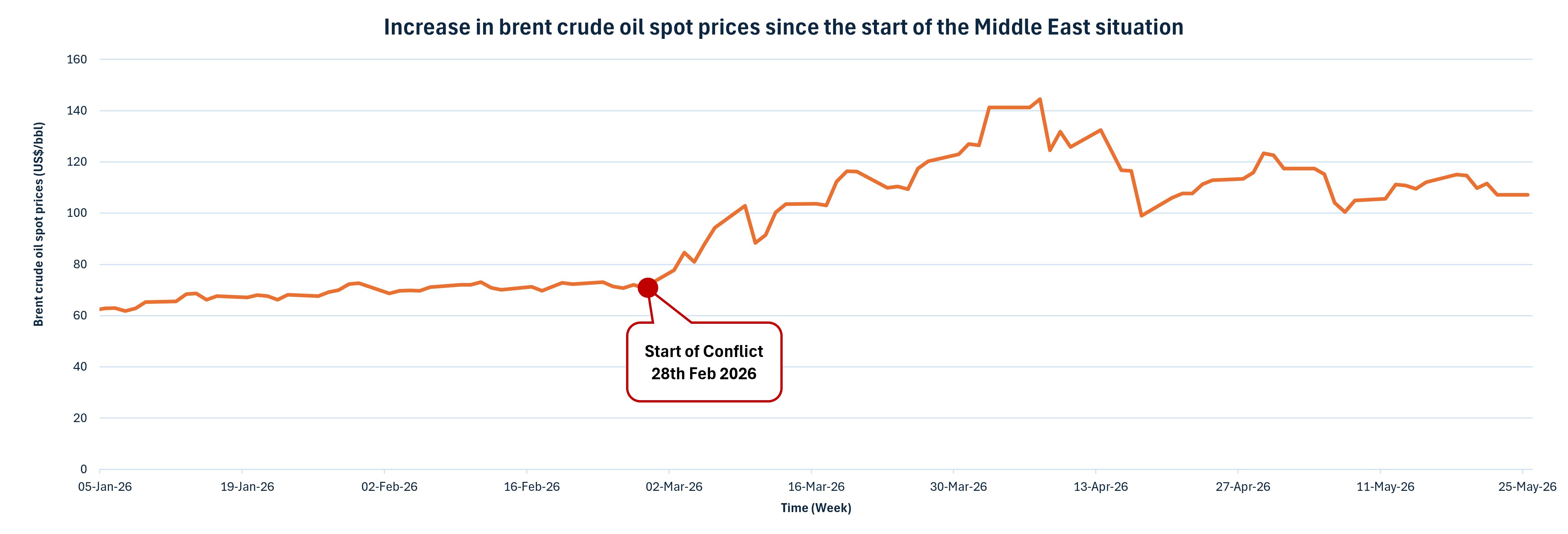
Graph 4: Crude oil prices, which natural gas prices are pegged to, increased sharply after 28 February 2026. This has translated into higher electricity generation costs.
A rise in global fuel prices can thus quickly flow into electricity costs, begging the question: Will this lead to higher electricity bills?
The short answer is, yes… but not immediately.
Electricity tariff
In Singapore, electricity tariffs are regulated by the Energy Market Authority (EMA) (opens in new tab). They are revised quarterly to reflect the costs of fuel and electricity generation.
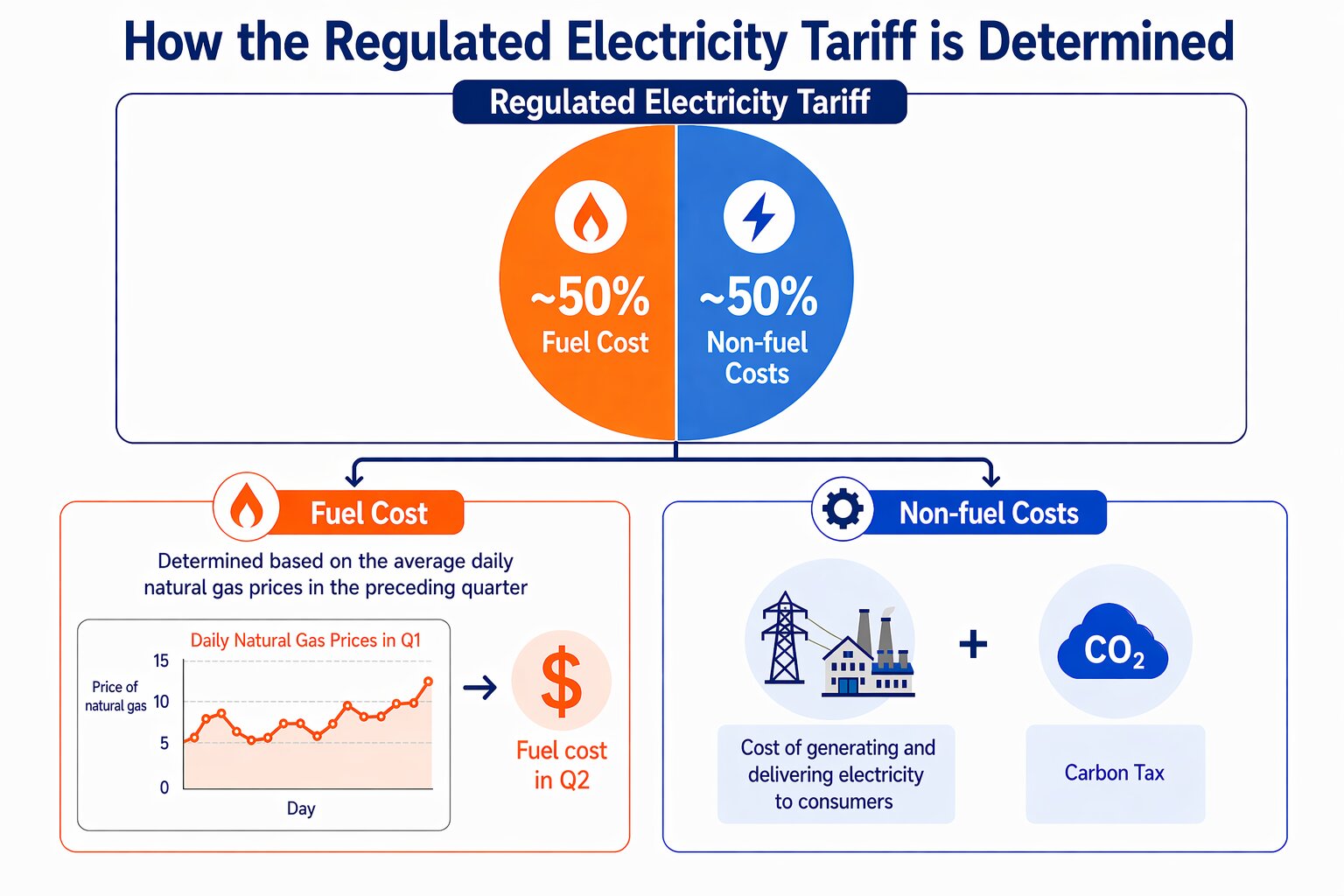
Graph 5: Fuel cost constitutes close to half of the electricity tariff and is determined based on the average daily natural gas prices in the first 2.5 months of the preceding quarter.
The situation in the Middle East has disrupted global fuel supply chains and pushed up natural gas prices significantly. As the electricity tariff for July to September 2026 is based on natural gas prices from April to mid-June, elevated fuel costs over the past few months have led to a sharper increase in our electricity tariffs for households, rising by 17% or 4.64 cents/kWh (before GST) compared to the previous quarter.
.png)
Graph 6: Quarterly household electricity tariff increased by 17.0% or 4.64 cents/kWh (before GST) in Q3 2026.
So why might the cost of your kopi become more gao?
Your kopi has come a long way. Disruptions in global energy supply have pushed up fuel prices, electricity costs, transport and food expenses, and may ultimately add to the costs of running a business like a coffee shop. Each ripple sets off the next and may eventually reach your kopi with a cost more gao than expected.
How long will this last?
The disruptions have already set off ripple effects through the global economy. Some key oil and gas infrastructures in the Middle East have also been damaged during the conflict. It may take months to years to restore the infrastructures and global fuel supplies.
Even if the situation improves, we need to be prepared for the effects of the Middle East situation to persist for some time.
Cushioning the ripple effects
The Government has activated a whole-of-government response, including standing up the Homefront Crisis Ministerial Committee to manage the impact of the crisis.
Key focus areas include:
Energy and food resilience, including supply chain resilience
Resilience for other essentials
Domestic and external security developments
Support measures for Singaporeans and public communications; and
Foreign affairs and Singapore’s diplomatic relations
At the same time, enhanced support measures (opens in new tab), including cost-of-living support and targeted assistance, are being rolled out to support Singaporeans and businesses.
The Government has rolled out a first support package in April this year, and a second support package on 29 July, in light of the persisting Middle East situation. Taken together, both packages amount to around $2 billion of Government support, on top of what was already provided in Budget 2026 (opens in new tab).
For Singaporeans and Households
First package:
$500 CDC Vouchers brought forward to June 2026
$400 to $600 Cost-of-Living Special Payment in September 2026
Second package:
Up to $190 of additional U-Save rebates in October 2026 and January 2027
$300 CDC Vouchers in January 2027
ComCare Interim Assistance for lower-income households (August - December 2026)
At least $250 per month (up to 3 months)
More flexible income eligibility criteria
For Active Platform Workers, Private Hire Car Drivers and Taxi Drivers
First package:
$200 cash relief
For Essential Transport Services
First package:
Temporary financial support to defray fuel cost hikes in April to June 2026
For Businesses
First package:
Increase Corporate Income Tax rebate to 50% for Year of Assessment 2026
Raise minimum benefit to $2,000 for eligible companies
Raise benefits cap to $40,000 per company
Expand Energy Efficiency Grant (Base Tier) to all sectors and extend to 31 March 2028
For Contractors
From March to 31 July 2026, the Government is co-sharing 50% of the direct additional costs arising from the use of diesel and bitumen in ongoing critical public sector construction projects (opens in new tab), where any delay or stoppages would clearly affect public interest.
Second package:
Enterprise Financing Scheme (September 2026 – March 2027)
SME Working Capital Loan: Government risk-share increased to 70%
Project Loan: Government risk-share increased to 70%, and extended to domestic construction projects
SME Cash Grant 2026 (November 2026)
$500 per local employee for eligible SMEs, capped at $2,500 per SME
Rental support for stalls in market and hawker centres managed by Government and Government-appointed operators (September 2026 – February 2027)
$1,200 per cooked food stall and $600 per market stall disbursed over six months
While global conditions remain uncertain, the Government will continue to walk alongside Singaporeans to weather the crisis, so that we may emerge stronger together as one.