
Stop Vaping
We take a zero-tolerance stance on vaping
Last updated 17 March 2026

The Horrors of Vaping are Real (Short Film)
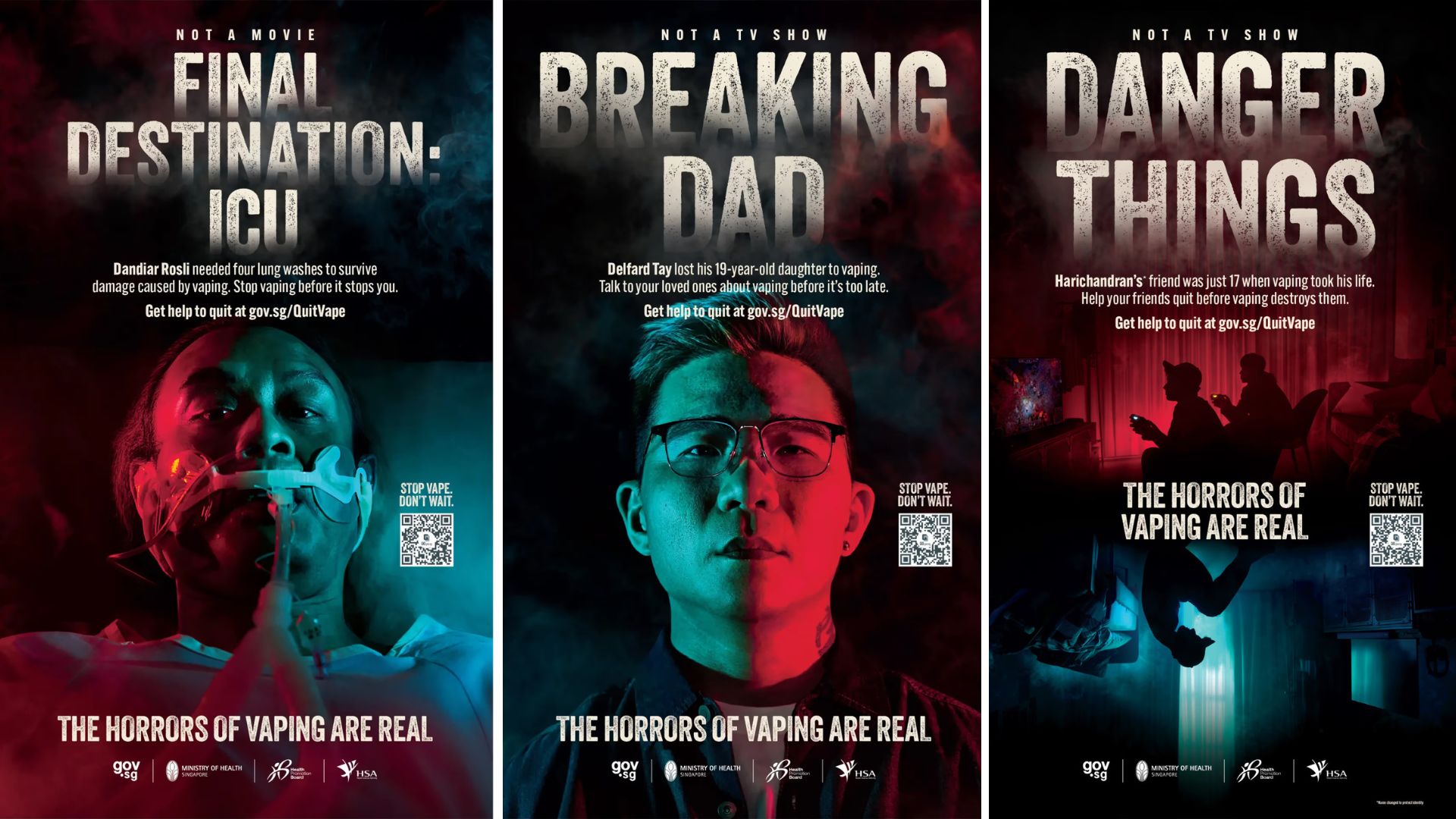
The horrors of vaping are real. Stop vape. Don’t wait. Get help to quit with the QuitVape programme.
If you witness a vaping-related offence:
Report online or call the Tobacco Regulation Branch: 6684 2036 / 6684 2037, from 0700 hrs – 2400 hrs daily (including weekends and public holidays)
Avenues for Support: How to Quit Vaping
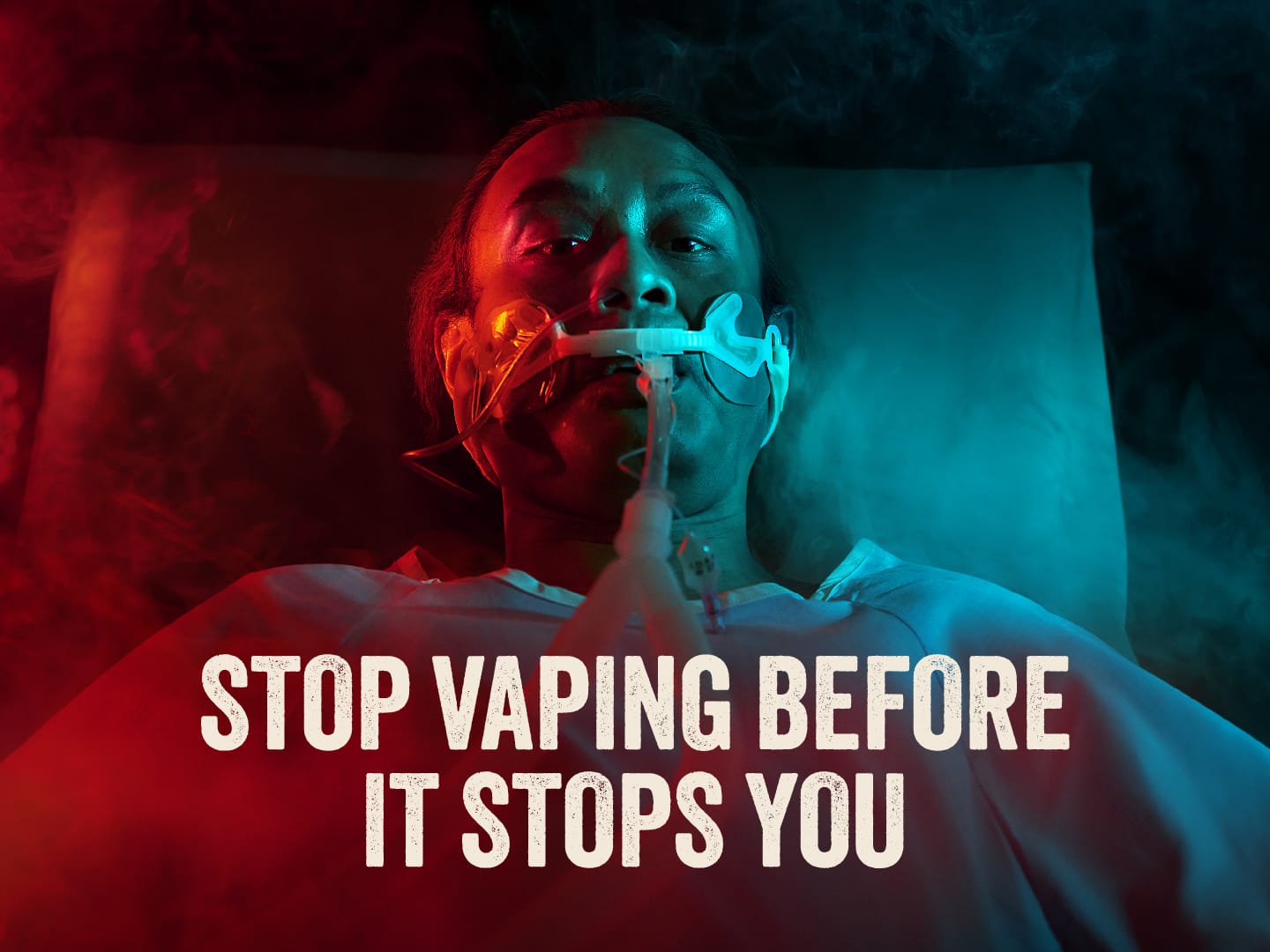
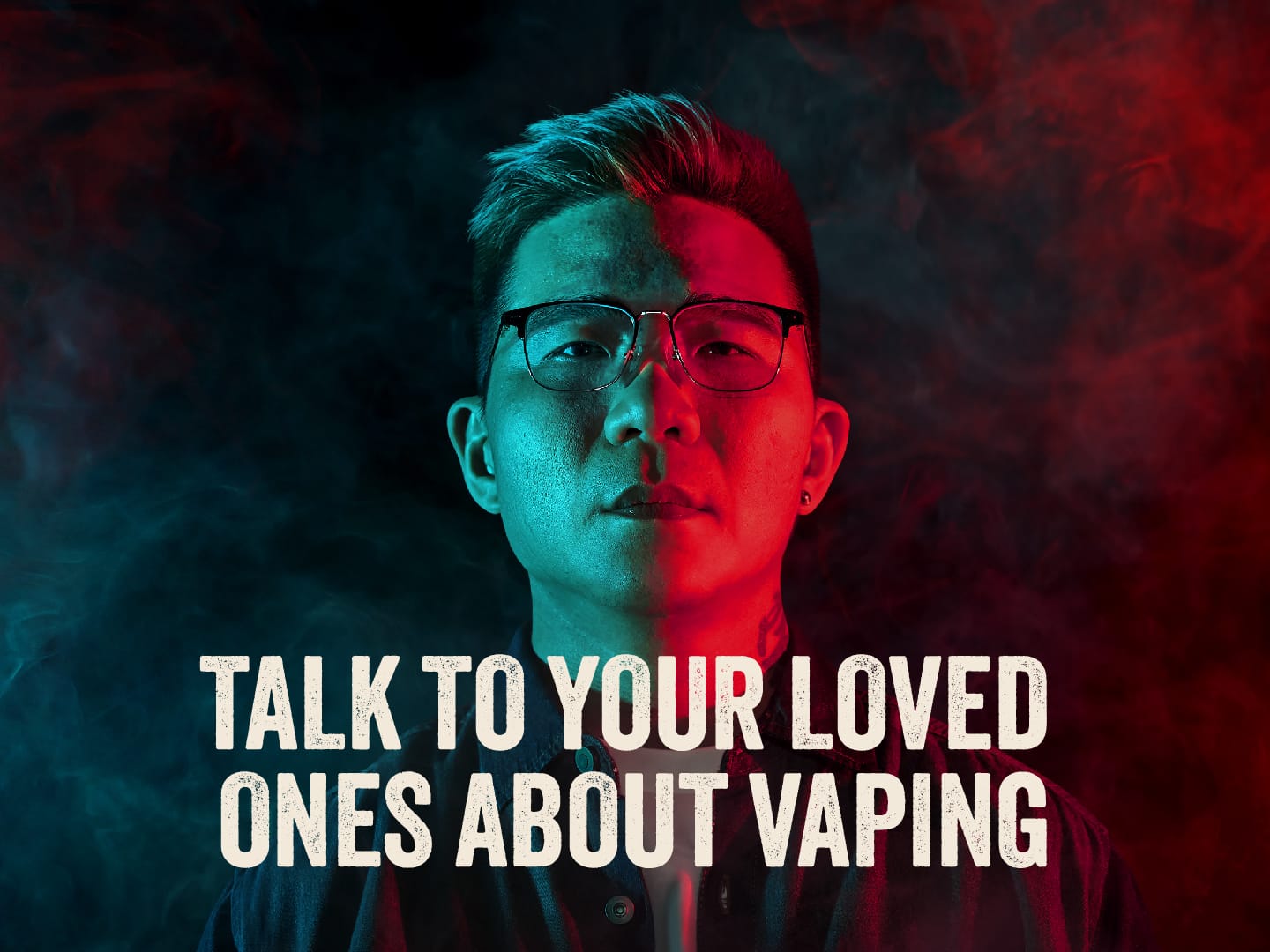
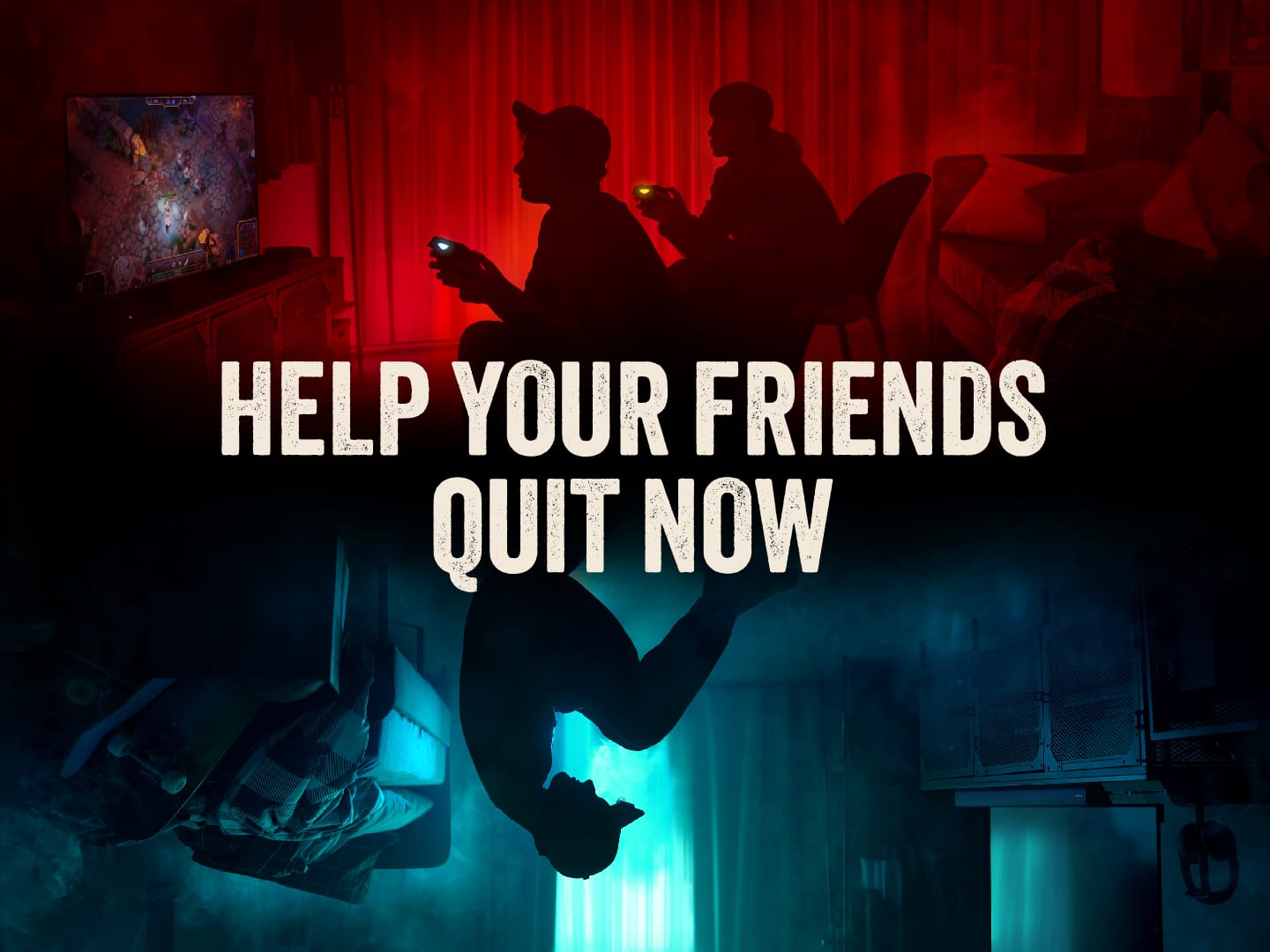
Higher Penalties for Vaporiser Users and Etomidate Abusers
The Tobacco and Vaporisers Control Act (TVCA) was passed in Parliament on 6 March 2026. The TVCA will empower the Ministry of Health and Health Sciences Authority to maintain our strong stance against vaping and etomidate abuse. It will come into effect from 1 May 2026.
Vaping Truths Vodcast
Vaping Truths: Health Risks & Regulations (Episode 1)
From the health risks of vaping to the Government's stepped-up regime against vapes - this vodcast special reveals the real and rising dangers of vape use and what’s being done to tackle the issue.
This first episode features special guests:
Adjunct Associate Prof Puah Ser Hon - Head and Senior Consultant, Department of Respiratory and Critical Care Medicine, Tan Tock Seng Hospital
Adjunct Prof Dr Raymond Chua - Chief Executive of Health Sciences Authority (HSA)
Muhammad Dandiar Rosli - Ex-Vaper
Vaping Truths: Impact of Vapes on Youths (Episode 2)
Youths are especially vulnerable to the dangers of vaping. In this episode, we dive into how vaping affects young people, from health risks to social pressures, and explore meaningful ways to start a conversation with them. Discover the real impact in this eye-opening 2-part vodcast.
This second episode features special guests:
Dr Annabelle Chow - Clinical Psychologist
Delfard Tay - Lost his daughter, Shermaine Tay, to Kpods
RunnerKao - Social Media Influencer, @runnerkao
Watch Explainer Videos
Informative videos about whole-of-government efforts to tackle vaping
Stop Vaping Resources
Stop Vaping Resources
Find resources to help you quit vaping
Frequently Asked Questions
Find answers to commonly asked questions on vaping.
1. Why is Singapore taking such a hard stance on vaporisers, but not cigarettes, given that vaporisers are touted to be safer?
Cigarettes were legal and widely used for many decades, before their harms were known and are unfortunately deeply entrenched in many societies, including Singapore.
To counter the harms of cigarettes, the Government has adopted a stringent regulatory framework for cigarettes. This includes high tobacco taxes, restrictions on advertising, graphic health warnings on packaging and smoking bans in public places, aimed at reducing smoking rates. These measures have been relatively effective, as seen in declining smoking prevalence in Singapore over the years.
In contrast, e-vaporisers are a relatively new product, and the Government has the opportunity to prevent these from becoming entrenched the same way as traditional cigarettes. Singapore is also not unique in banning these products, about 34 countries ban sales of e-vaporisers globally[1].
The ban aims to pre-emptively stop these new harmful and addictive products from entering the market, and prevent a new set of associated health issues, especially given the growing body of evidence that suggests that they are not without harm and e-vaporisers are not safer than cigarettes. A study by HSA on the commonly found e-vaporisers in Singapore last year found that the nicotine consumed from one e-vaporiser can be equivalent to about three to four cigarette packs.
[1] WHO report on the global tobacco epidemic, 2023: protect people from tobacco smoke. Geneva: World Health Organization; 2023 (https://www.who.int/publications/i/item/9789240077164).
2. Why did we choose to ban vaporisers instead of regulating them like in some countries?
Singapore takes a harm elimination stance on emerging and imitation tobacco products to protect our population from the known and unknown health risks of these products. The importation, sale, distribution for sale, possession, use and purchase of such products, including vaporisers, are prohibited.
Vaporisers contain a range of toxic substances and nicotine, which is highly addictive, particularly for youths. There is accumulating evidence on the longer-term harms of vaporisers. The evidence on vaporisers as a smoking cessation aid is not strong, with concerns of continued longer-term usage of vaporisers even after quitting cigarette smoking and dual usage of vaporisers and cigarettes among those who failed to quit cigarette smoking.
3. What are the rehabilitation programmes for the various profiles of user? Will there be any changes in the rehabilitation programmes under TVCA?
The rehabilitation programmes will remain.
Second-time vaporiser offenders will attend mandatory community-based rehabilitation under HPB. This is a three-month programme, consisting of individual counselling sessions.
First-time and second-time etomidate vaporiser offenders will attend mandatory community-based rehabilitation under the Institute of Mental Health (IMH) and Social Service Agencies (SSAs), for three to six months. The programme consists of various types of individual and group counselling sessions, tailored to the clinical risk of the abuser.
Those who are under 21 years of age will undergo rehabilitation under the Ministry of Social and Family Development’s Youth Enhanced Supervision scheme, which is tailored to their developmental stage and risk profile.
Etomidate vaporiser offenders caught for the third time or more will be admitted to and detained at the Drug Rehabilitation Centre (DRC) for institutional treatment and rehabilitation. Rehabilitation programmes would include the Psychology-based Correctional Programme (PCP), family programmes, structured pro-social support programmes, and religious counselling. Those who are under 16 years of age will not be sent to the DRC but instead, they will be placed under regular testing for 12 months.
4. Some parents have said that financial penalties do not help in their situation as their children still continue to use vaporisers or etomidate vaporisers. What will be done to support these parents and their children?
MOH recognises that many vaporiser users are young and may have picked up vaping unwittingly. That is why preventive education is important. The QuitVape programme remains available for those who have picked up vaping and voluntarily step forward to seek help for quitting.
The QuitVape programme is designed to support individuals who voluntarily seek help to overcome their dependence on vaping. The Institute of Mental Health (IMH) and Social Service Agencies (SSAs) offers rehabilitation for those who voluntarily seek help to overcome etomidate vaping. The public can seek help for smoking and vaping cessation from the Health Promotion Board’s (HPB)’s I Quit Programme, if they are not using etomidate vaporisers.
For those who have been caught flouting the law, the Notice of Composition and fine upon prosecution is a form of financial penalty meted out to offenders. There is an established process for appeals which parents may apply to.
On top of financial penalties, the priority is also to ensure that those who require rehabilitation will receive the necessary support. Repeat regular vaporiser users and all etomidate vaporiser users who are caught will continue to be subject to mandatory rehabilitation programmes to support them to quit.
Rehabilitation programmes for youths under the Ministry of Social and Family Development’s Youth Enhanced Supervision Scheme (for first and second-time etomidate vaporiser offenders) include family sessions, to reflect the crucial role parents and other family members play as a support system in preventing relapses and sustaining long-term rehabilitation.
Parents can also refer to the Families for Life website for conversation tips to initiate an open conversation with their child on vaping and etomidate use, to encourage their child to seek treatment voluntarily. Tips are also available on HPB’s ParentHub website and Parenting for Wellness website.
5. Besides strengthened enforcement, have/will preventive education efforts be enhanced so that children and young persons are educated on the risks of vaping and etomidate vaporisers pre-emptively?
The Government has significantly ramped up comprehensive anti-vaping messaging across multiple platforms to inform the public about the dangers of vaping and etomidate vaporisers.
Public education efforts have been rolled out on digital display panels islandwide, free-to-air TV, radio, mainstream newspapers, digital, social and out-of-home platforms. There are also ongoing collaborations with online content partners.
A dedicated anti-vaping microsite has also been launched, at gov.sg/quitvape. The microsite serves as a one-stop portal consolidating all key vaping-related resources in one place. Members of the public can access educational content, download anti-vaping materials, and find information on available support services for those who wish to quit
HPB will continue its ongoing education on the risks of vaping, i.e health harms and illegalities of vaping, and encourage our youths to lead a nicotine-free lifestyle. In its recent efforts, it pushed out a series of social content featuring subject matter experts including a doctor, HSA's lab director, IMH's Deputy Head of National Addictions Management Service, and I Quit counsellor and programme lead. The series addresses vaping's health risks, toxic chemical content, peer pressure management, withdrawals and the science behind addiction. This expert-led content provides evidence-based information to help individuals make informed decisions to remain vape-free and share practical support for those looking to quit.
Prior to this, HPB has also launched a public communications campaign in June 2025, specifically to reach out to youths and young adults aged 18-35. The campaign aimed to raise awareness of vaping’s illegality and health harms and encourage our youths and young adults to see past the seemingly “attractive” facade and recognise the real, harmful impact of vaping. This included advertisements at multiple youth-frequented touchpoints such as bus stops, buses, MRT stations, cinemas and digital display panels, alongside targeted social media, digital advertising and online content platforms.
Public education remains a priority in schools and Institutes of Higher Learning (IHLs). HPB works with MOE and IHLs to incorporate key messages into the curriculum to dispel common misconceptions about vaping and smoking and equip youth with knowledge and life skills to refuse vaporiser and cigarette offers. Programme delivery includes:
Interactive programmes delivered across primary, secondary schools and IHLs
Resources provided to educators to support discussions about the harms of vaping and smoking with their students